Quartz vs. Granite: Why Engineered Stone is the Ultimate Upgrade for Your Home
March 16, 2026
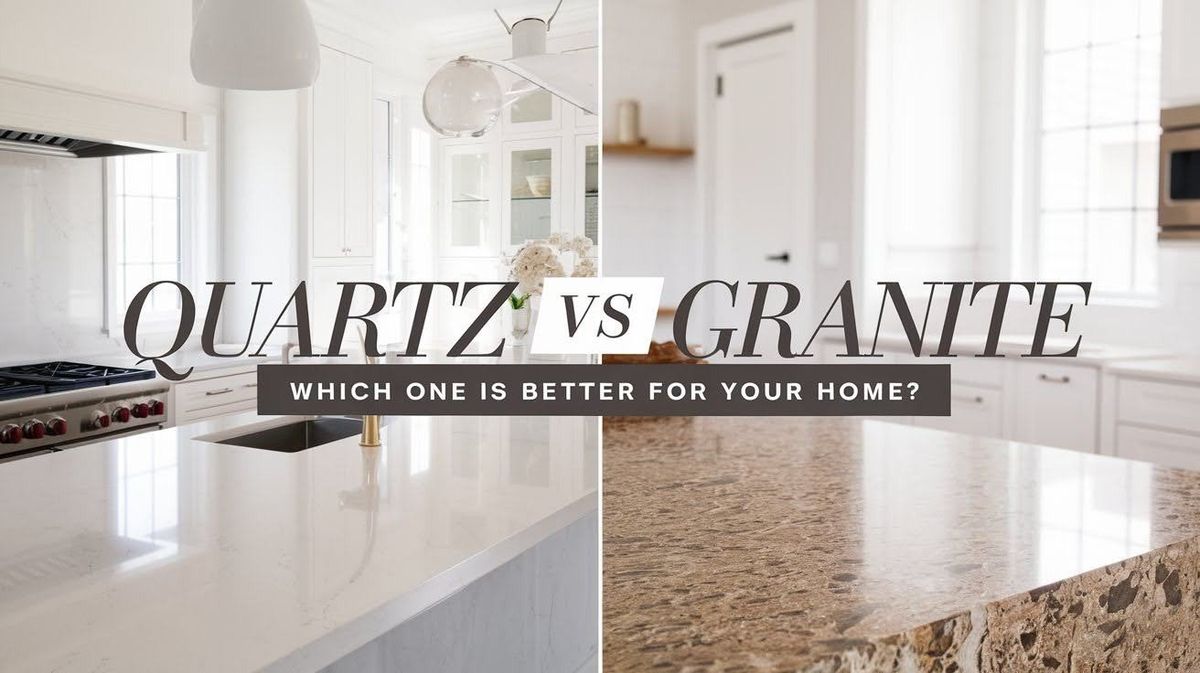
Quartz vs. Granite: Why Engineered Stone is the Ultimate Upgrade for Your Home
Choosing a new countertop is more than a design choice; it’s a long-term investment in your home’s value and your daily sanity. While Granite has been a traditional go-to.
Here is why Quartz is the superior investment for the modern lifestyle.
This blog post will delve into the pros and cons of each material, comparing them on key factors like composition, durability, maintenance, aesthetics, and cost to help you make an informed decision for your home.
Understanding the Contenders
Granite: The Natural Powerhouse
Granite is a 100% natural stone. It's an igneous rock, formed from the slow crystallization of magma below the Earth's surface. It's quarried from the ground in large blocks and then sliced into slabs. Every piece of granite is unique, a masterpiece of nature with swirling patterns and mineral flecks created over millions of years.
Quartz: The Engineered Marvel
Quartz (also known as engineered stone) is a composite material. While its name comes from the main ingredient, it's not a natural stone in the same way granite is. Quartz slabs are made from a blend of about 90-93% crushed natural quartz (one of the hardest minerals on Earth) and 7-10% resins, polymers, and pigments, which bind the materials together.
The Showdown: Comparing Key Factors
1. Aesthetics and Design Flexibility
Granite: Offers unparalleled natural beauty. No two slabs are identical, providing a truly unique look for your kitchen or bathroom. However, your options are limited to what nature provides. The natural variations in color and pattern, which some love, can be a drawback for those seeking a uniform look. You also cannot choose a specific pattern, but rather, you select from available slabs at a stone yard.
Quartz: Offers much more design flexibility. Because it's manufactured, quartz can be created in a wide range of colors and patterns, mimicking the look of natural stones like marble (think: soft white with grey veins) or concrete, or offering bold, solid colors. The pattern is consistent throughout the slab, providing a predictable and uniform appearance.
Winner for Variety: Quartz Winner for Uniqueness: Granite
2. Durability and Hardness
Both materials are incredibly durable, but they have different strengths and weaknesses.
Granite: Is naturally very hard (ranking around 6-7 on the Mohs scale). It's resistant to scratches and high heat (though trivets are always recommended). It can, however, be susceptible to chipping if a heavy object is dropped on an edge. It is also porous.
Quartz: Because it uses hard crushed quartz and flexible resins, it is slightly harder and less prone to chipping than granite. It's extremely resistant to scratches and dents. However, quartz is sensitive to high heat. The resins can discolor or scorch if a very hot pan is placed directly on the surface.
Winner for Overall Toughness: It's a close call. Quartz is slightly better for scratch and chip resistance, but Granite is better for heat resistance.
3. Maintenance and Care
This is perhaps the biggest point of difference for many homeowners.
Granite: Is porous, meaning it can absorb liquids. This makes it susceptible to staining from oils, wine, or acidic liquids if not properly sealed. It requires periodic resealing (typically once a year or more, depending on use) to maintain its stain resistance.
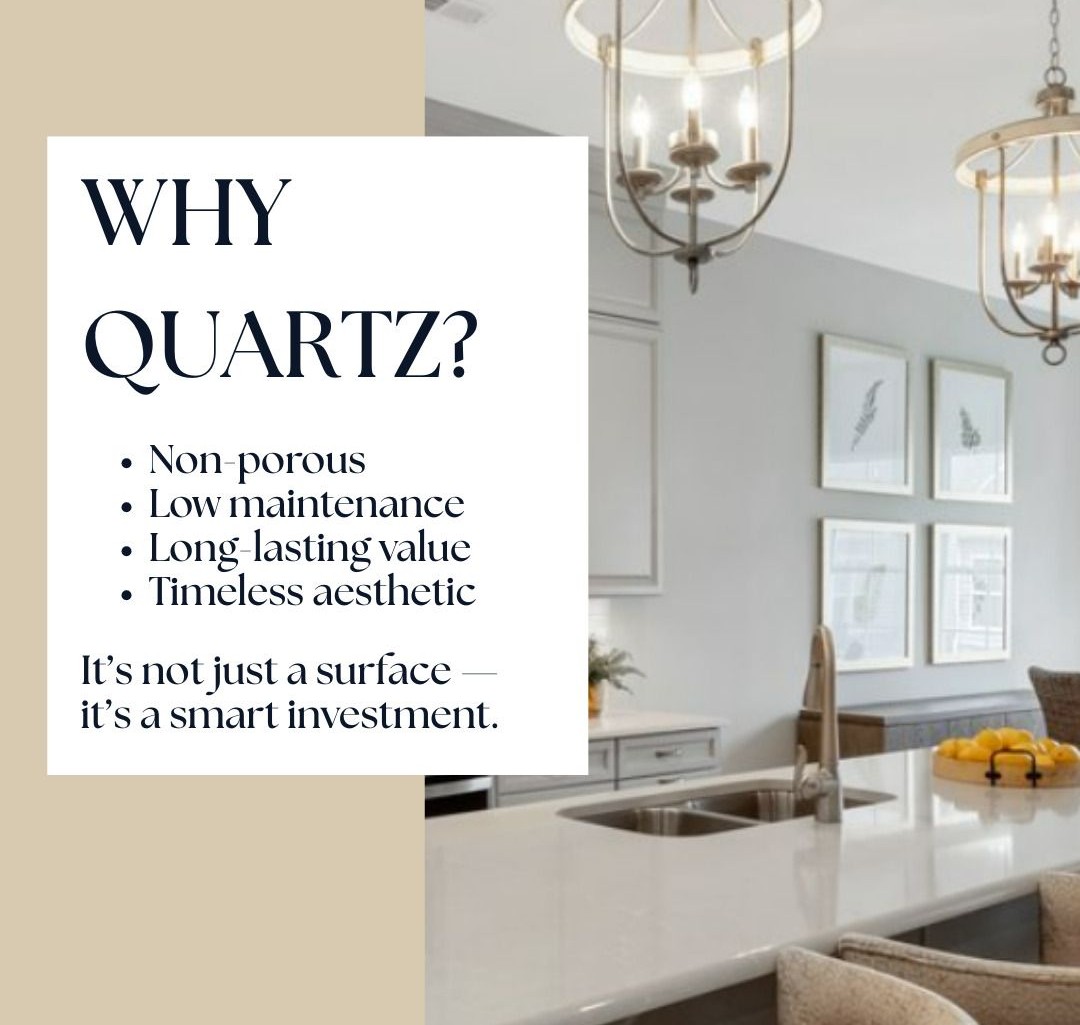
Quartz: Is non-porous. Thanks to the resin binder, it's virtually stain-proof and hygienic. Liquids simply bead up on the surface and can be easily wiped away. It never requires sealing. This low-maintenance quality is a major selling point for busy households.
Winner: Quartz (for low maintenance)
What Makes Quartz the Modern Standard?
While Granite is simply a rock pulled from the earth, Quartz is a masterpiece of engineering. Composed of roughly 93% crushed natural quartz—one of the hardest minerals on the planet—and 7% high-performance resins and pigments, it is designed specifically to outperform natural stone in every category that matters to a homeowner.
1. Design Without Compromise
With Granite, you are at the mercy of whatever the quarry yields. If you find a slab you like, you have to hope the next one matches. Quartz eliminates the guesswork.
-
Consistency: Enjoy a perfectly uniform look. If you fall in love with a sample, that is exactly what will be installed in your kitchen.
-
Trend-Setting Styles: Quartz can perfectly mimic the elegant veining of Carrara marble or the industrial chic of concrete—without any of the fragility associated with those materials.
2. The "Set It and Forget It" Maintenance
This is the biggest "Quality of Life" upgrade Quartz offers. Granite is naturally porous; it acts like a sponge for red wine, oils, and bacteria unless you painstakingly reseal it every year.
-
Non-Porous Surface: Quartz is factory-sealed for life. It is virtually stain-proof and incredibly hygienic, making it the safest surface for food preparation.
-
Zero Resealing: Spend your weekends enjoying your kitchen, not scrubbing and resealing stone.
3. Unbeatable Durability
While Granite is prone to "cleaving" or chipping if a heavy pot hits an edge, the resin binders in Quartz provide a touch of flexibility. This makes Quartz tougher, more impact-resistant, and nearly impossible to scratch. It is built to handle the chaos of a high-traffic family kitchen without showing a hint of wear.
Which Slab Is the Right Investment for You?
The right choice depends entirely on your lifestyle, aesthetic preferences, and tolerance for maintenance.
Choose Quartz:
-
You want a low-maintenance, stain-resistant countertop that never needs sealing.
-
You prefer a consistent, uniform look with a wide range of modern color options (like marble look-alikes).
-
Your priority is scratch and chip resistance.
-
The kitchen is a high-traffic area.
Conclusion: Both quartz and granite are excellent investments that add significant value to your home. They are both durable, beautiful materials that can last a lifetime with proper care. The "right" choice isn't a matter of one being objectively better, but rather which one best fulfills the specific requirements of your home and life.